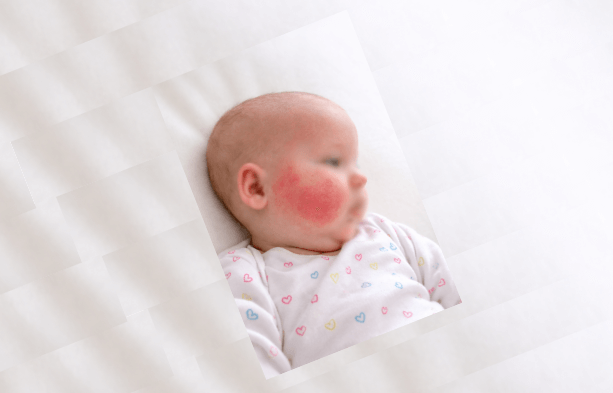
Signs of food allergy in children
How do you know if a child has it?
A food allergy in a baby or young child may not only show up as a rash. In some children, the reaction is quick and noticeable, while in others it takes hours or days. This is why it can be difficult to know whether a specific food is really causing the problem.
The symptoms of a food allergy are often mistaken for reflux, a sensitive tummy, teething, a cold, or common digestive problems.
This article summarizes the most common symptoms of food allergy in breastfed, non-breastfed babies, and older children.
How to recognize a food allergy in a baby?
Food allergies can affect a child's skin, digestion, stool, breathing, and behavior.
Common symptoms include:
- worsening of eczema
- red or itchy patches on the skin
- mucus in the stool
- blood in the stool
- diarrhea or more frequent bowel movements
- bloated belly
- colic
- reflux or excessive blinking
- restlessness and frequent awakenings
- hives or swelling in rapid reactions
Young children often experience multiple symptoms at once. A typical combination is skin + tummy + stool.
Can a breastfed baby have an allergy through breast milk?
Yes. In breastfed babies, allergens can enter the baby's body through breast milk. Reactions are often milder, slower, and less noticeable than in a baby who eats the food directly.
In breastfed babies, allergies often manifest mainly as eczema, tummy aches, changes in stool, reflux or restlessness.
Can a non-breastfed baby have a food allergy?
Yes, even a non-breastfed baby can have a food allergy. The most common type is cow's milk protein allergy (CMPA), where the baby reacts to regular formula containing cow's protein.
If this allergy is suspected, it is possible to contact a pediatrician who can prescribe a special hypoallergenic or dairy-free formula suitable for children with allergies.
What are the symptoms of allergies in breastfed and non-breastfed babies?
Skin
In a breastfed baby, a food allergy can manifest as:
- worsening of eczema within 24–48 hours
- red bearings
- itch
- eczema oozing
Wetting does not always mean infection. Sometimes it can be a strong reaction of the body to a large amount of allergen. However, if the condition worsens quickly, the lesion smells, is painful, or there are signs of infection, it is necessary to discuss the condition with a doctor.
Stool
The following may appear in the stool:
- phlegm
- greenish stool
- more frequent diarrhea
- blood streaks in small babies
- sour smell of stool
Mucus or blood in the stool is one of the common reasons why parents start treating food allergies.
Belly and reflux
Food allergy can cause:
- colic
- bloated belly
- crying after eating
- frequent farts
- reflux
- violent vomiting or excessive blinking
These symptoms are often mistaken for "normal stomach ache."
Behavior and sleep
The child may be:
- restless
- sleep worse
- to wake up often
- to cry a lot
- to seem "unsatisfiable"
For some babies, restlessness and poor sleep are one of the first signs that something is wrong with them.
What are the symptoms of food allergy in older children?
In older children, the child reacts directly to the food they have eaten. Reactions can be immediate or delayed.
We mainly distinguish:
- rapid IgE allergic reactions
- delayed non-IgE reactions
- local contact reaction
What does a rapid allergic reaction after eating look like?
A rapid IgE reaction usually occurs within a few minutes to 2 hours after eating.
Typical rapid manifestations are:
- hives
- skin redness
- body itching
- swelling of the lips, eyelids, or tongue
- rapid vomiting
- abdominal pain
- diarrhea
- wheezing
- cough
- difficulty breathing
Quick reactions are always important and need to be addressed with a doctor.
What is anaphylaxis and when to call for help?
Anaphylaxis is the most severe form of allergic reaction. It occurs suddenly and rapidly, often within minutes.
It can manifest as:
- whole-body hives
- severe swelling
- stuffiness
- wheezing
- vomiting and diarrhea
- weakness
- pallor
- swoon
If anaphylaxis is suspected, it is necessary to call emergency services.
How to recognize a delayed food allergy?
A delayed non-IgE reaction can occur 8 hours or even several days after consuming a food, which is why it is often harder to detect.
Typical delayed manifestations are mainly on the skin, in the stool, digestion and behavior of the child.
Skin
- worsening of eczema
- itchy lesions
- redness
Digestion and stool
- abdominal pain
- flatulence
- mucus in the stool
- blood in the stool
- loose or frequent stools
- reflux
- vomiting 1–3 hours after eating
Overall symptoms
- The baby is restless.
- sleeps poorly
- doesn't want to eat
Delayed allergies are often not seen in routine allergy tests, which can be confusing for parents.
Can eczema be a sign of a food allergy?
Yes. In young children, worsening eczema can be a sign of a food allergy.
Typically, eczema gets worse after a certain food or after a food eaten by a nursing mother. The reaction may not come right away. In delayed reactions, eczema may only get worse after a few hours or the next day.
Is mucus or blood in stool a sign of allergy?
It could be. Mucus, greenish stool, more frequent diarrhea, or streaks of blood in a small baby may be related to a food allergy, often a reaction to cow's milk protein, for example.
However, blood in the stool is always a reason to consult a doctor.
Can reflux be caused by a food allergy?
Yes, reflux or excessive blinking can be one of the symptoms of a food allergy.
In some children, allergies manifest as violent vomiting, in others as frequent blinking, restlessness after eating, or tummy aches.
What does a food contact reaction mean?
Some children react when they touch food. For example, around the mouth or on the hands, they may experience:
- redness
- small pimples
- itch
Such a reaction may not necessarily indicate a general food allergy. It may simply be a local contact irritation or sensitivity. However, it is a good idea to note the reaction and monitor for recurrence.
How do I know if it's really a food allergy?
A food allergy may be indicated mainly by the fact that symptoms recur in connection with a specific food.
Important signals are:
- a combination of symptoms, for example skin + belly + stool
- repeated worsening after the same food
- improvement after skipping a meal
- deterioration after its re-inclusion
The most reliable practical method is the elimination-exposure procedure: the food is eliminated for a certain period of time and then reintroduced in a controlled manner.
What is the difference between allergy and intolerance?
Intolerance is not an allergy.
Intolerance is not an immune reaction, but often a problem with processing a particular food component. Examples include lactose intolerance or celiac disease.
Typical symptoms of intolerance are:
- flatulence
- flatulence
- abdominal pain
- amount-dependent reaction
An allergy is an inflammatory reaction of the immune system. The reaction may not depend only on the amount and may also affect the skin, stool, breathing or the general condition of the child.
When to see a doctor?
See a doctor especially if you experience:
- blood in the stool
- the child is not doing well
- severe colic throughout the day and night
- vomiting after every meal
- swelling
- wheezing or shortness of breath
- recurrent hives
- severe worsening of eczema
Rapid allergic reactions, swelling, wheezing or shortness of breath always need to be addressed urgently.
How to monitor allergy symptoms?
It is very important to keep track of food allergies. It is not enough to just remember what the child ate. It also helps to write down:
- foodstuffs
- eczema
- stool
- tummy
- sleep
- unrest
- diseases
- teething
- reclassification of food
This makes it easier to recognize whether it is a random deterioration or a recurring reaction to a specific food.
Summary: How to recognize a food allergy in a child?
Food allergy can have rapid, delayed or combined manifestations.
In breastfed babies, it often manifests itself through breast milk, mainly through eczema, colic, reflux, or changes in stool.
Immediate IgE reactions tend to be noticeable and can be dangerous. Delayed non-IgE reactions are common but harder to detect and often not seen in tests.
The best way to verify is to systematically monitor symptoms, an elimination phase, and then a controlled reintroduction of the food.
The Baby w/o allergies app will guide you through this process step by step — from recording symptoms to tracking foods to a clearer evaluation of the connections.
Track foods and symptoms in one place